Chris’ Story
“Fail We May. Sail We Must.”: How One Man Turned a Terminal Diagnosis into a Campaign for Change
When Chris was told he had glioblastoma, one of the most aggressive forms of brain cancer, his first reaction wasn’t fear. It was anger. Not at the disease itself but at the way the news was delivered. “There was no emotion,” he recalls. “Diagnosis, then prognosis. Like reading from a script.” He refused to be told how long he had left. Two and a half years later, the 52-year-old father of three is still here challenging the systems he believes fail brain cancer patients at their most vulnerable moment.
His story began not with headaches or subtle symptoms, but with a violent seizure at home. Unknowingly he had crushed three vertebrae in his spine. Initially, he was told he had fractured just one bone. A private specialist later revealed it was three. Weeks after that following another seizure doctors identified the cause, a glioblastoma. The spinal injury, he says, became an unexpected distraction. “The broken back was so consuming, so painful, that it almost shielded me from the cancer diagnosis. If I’d only had the cancer to think about, I don’t know how I’d have coped.”
From the outset, he made one firm decision, no prognosis. When he later surrendered his driving licence, he was told he could reapply in two years. The implication was clear. He didn’t accept it.
“I’m not doing all this for five extra months,” he says, referring to survival statistics often quoted in relation to additional therapies. “I’m here for five years.”
His treatment followed the standard NHS pathway with surgery, radiotherapy and then chemotherapy.
He was not offered a clinical trial. No cognitive assessment followed his diagnosis. He experienced support services that felt minimal compared to those offered to stroke patients.
That disparity became even clearer months later.
In spring 2024, he experienced a series of transient ischaemic attacks (TIAs), often described as mini-strokes, likely linked to radiotherapy. Returning to hospital, he found himself placed on a stroke pathway rather than a cancer one. The difference was immediate with occupational therapy, physiotherapy, psychological support and structured follow-up. “It was stark,” he says. “Stroke patients received coordinated in community follow-up, occupational therapy and psychological support for the whole patient” and as a brain cancer patient he didn’t have a single visit from the community health teams. He chose a different approach to an emotionally draining process of complaint. He shared his experience directly with hospital leadership. The result: he is now working with senior leaders to review how community support could be expanded to brain cancer patients as well as stroke survivors. “For the first time, I saw hope inside the system. If I can help make the pathway better for the next person, then something good comes out of something awful.”
Unwilling to rely solely on UK standard care, Chris began travelling to Germany for dendritic cell immunotherapy, funded through a GoFundMe page he created the day he boarded the plane.
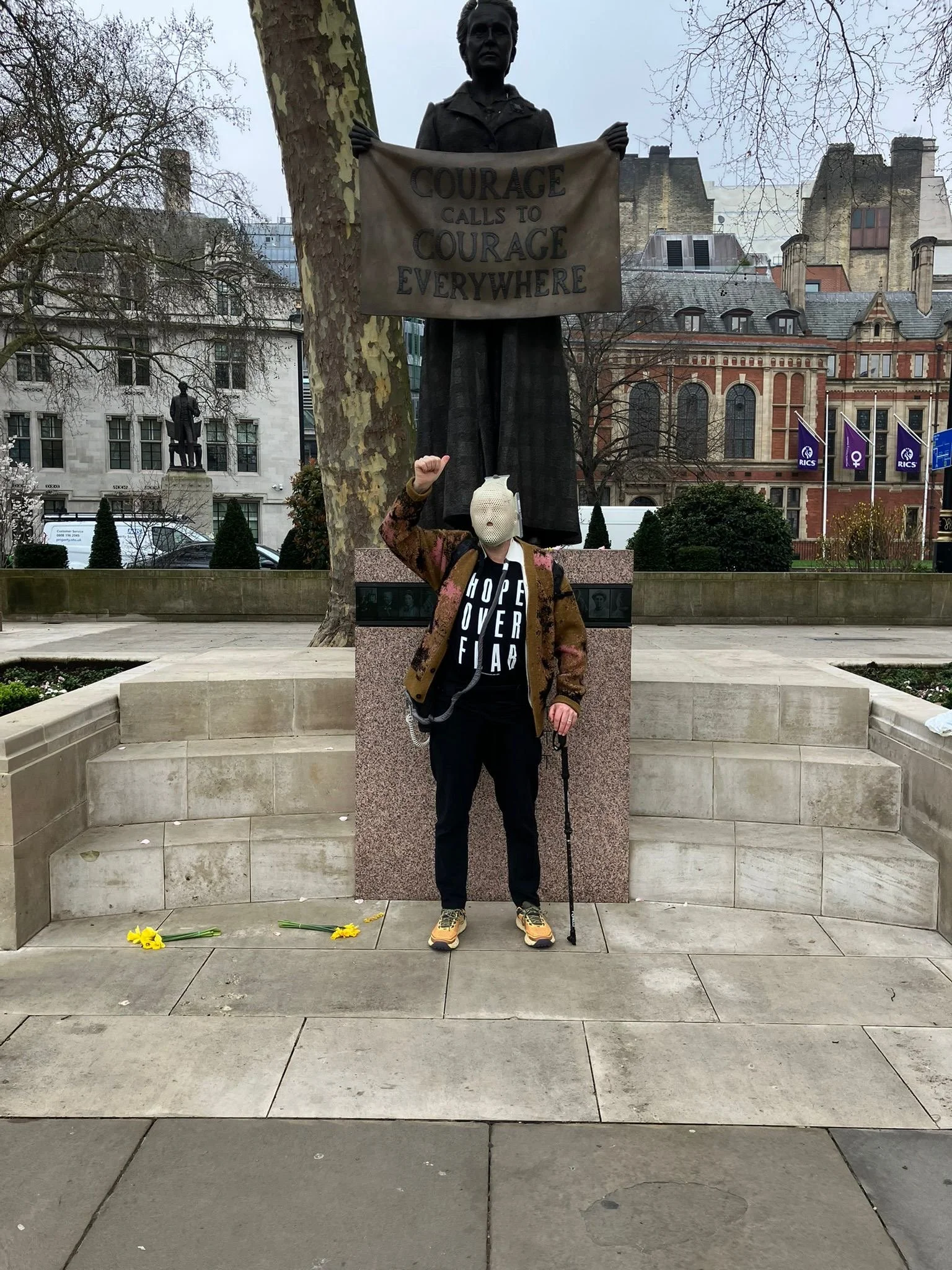
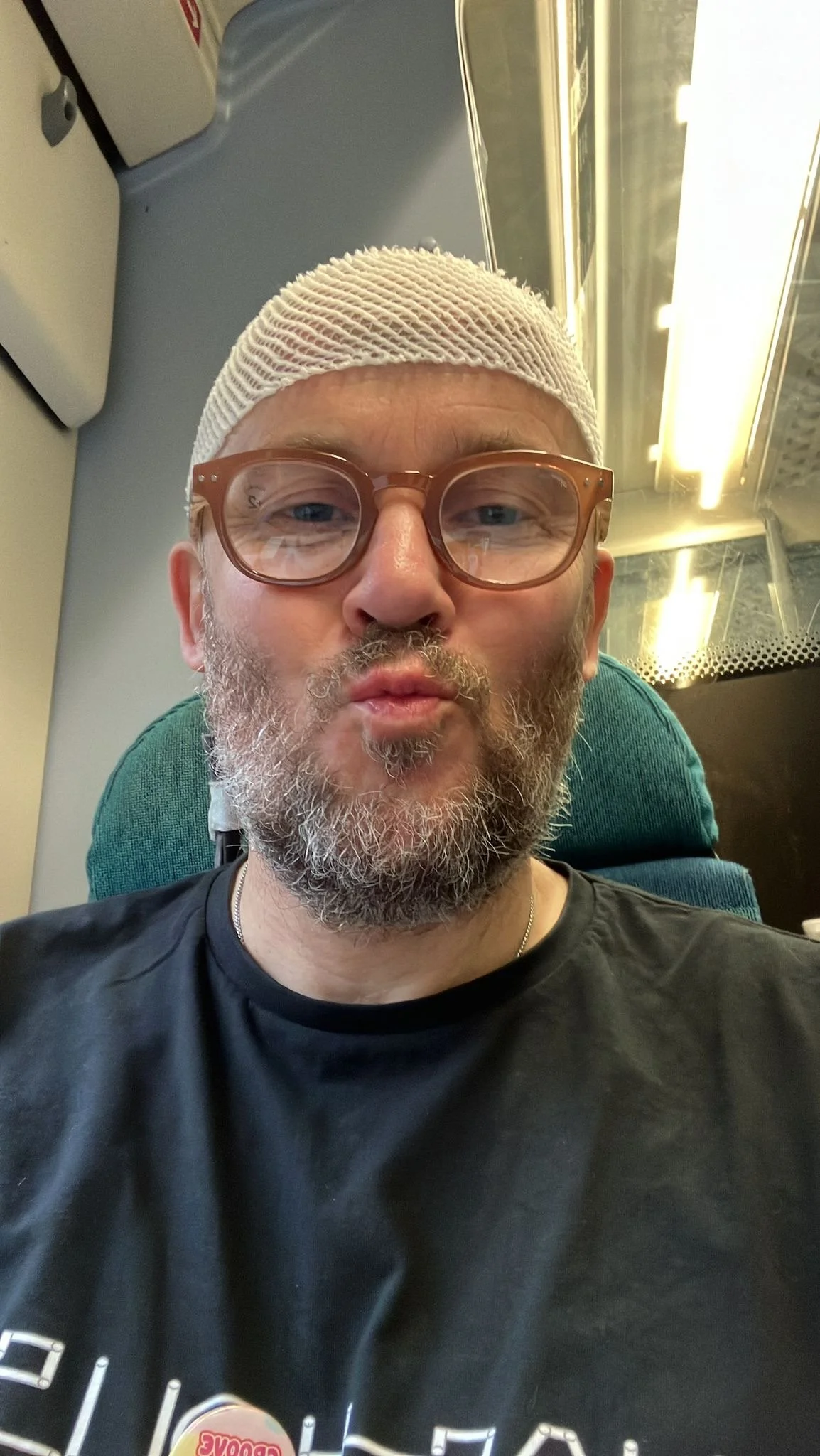
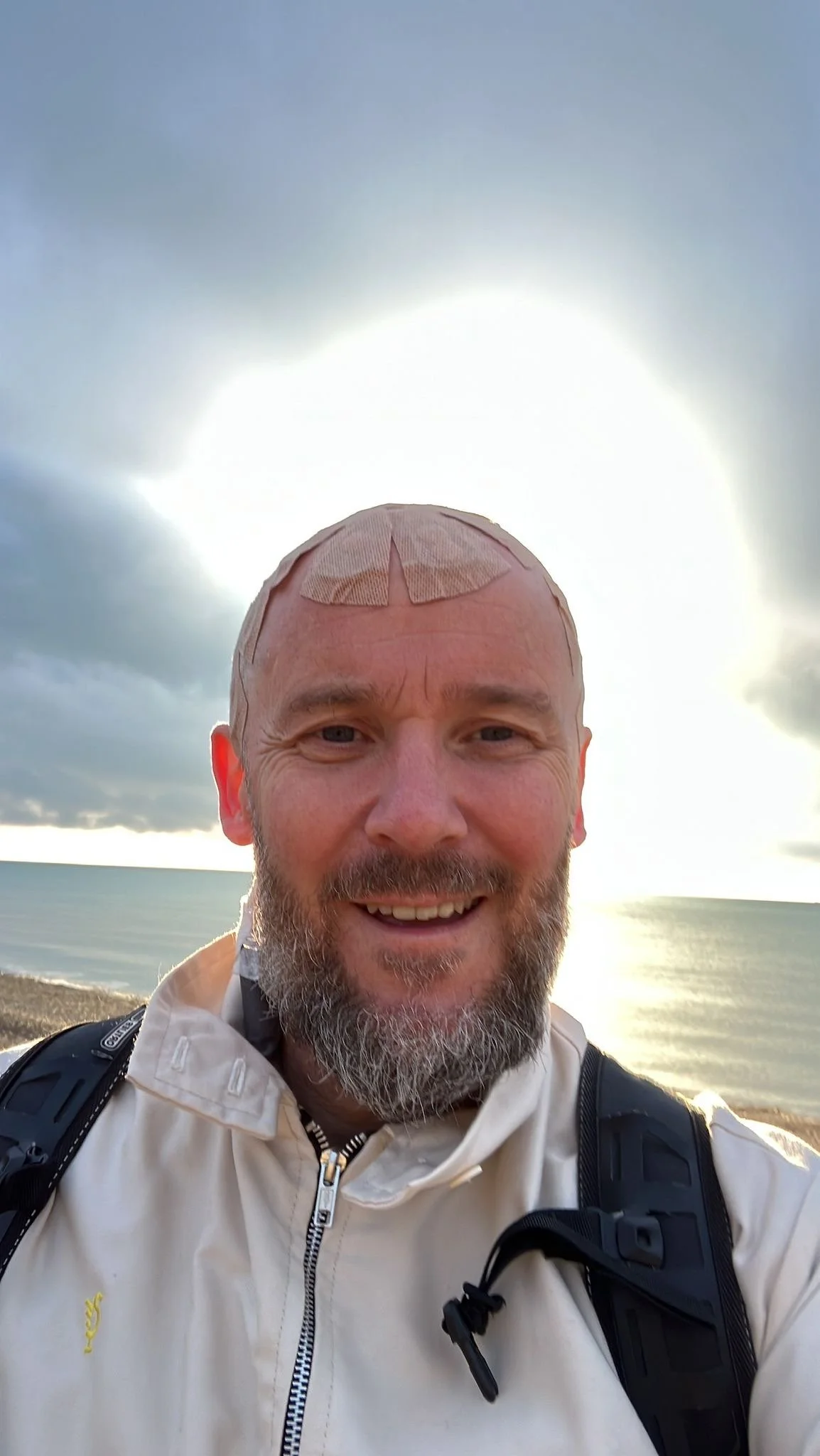
At home, he also adopted Optune in July 2024, a wearable device delivering cancer treating electric fields through arrays attached to a shaved scalp. Chris initially resisted the idea, concerned about quality of life. Six months after diagnosis, he changed his mind. Shaving his head became a family event. A friend arrived wearing a comedy wig, joking in exaggerated accents while clipping away his hair in the garden. “We made it ours,” he says. “You have to give parts of your life to cancer. But you can choose how.” He has worn the device day and night ever since.
His Doctor in Germany Professor Steffan Van Gool describes the approach not as chasing miracles but as constructing “pillars. NHS treatment is one pillar. Germany is another. Optune is another. You build as many as you can and hope the structure holds.”
Today, his cancer is best described as stable.
A quote that is close to Chris is “Fail we may. Sail we must.” He plans to have it tattooed alongside an octopus, his symbol for glioblastoma: Dynamic. Intelligent. Relentless. Seemingly impossible to remove completely, safely, through surgery. “You can cut parts of it away,” he says. “But some of it stays. So I choose to embrace it.”
Chris admits the early days felt hopeless. “There was zero hope in that first experience. Zero.” But somewhere between the seizures, the broken back, the strokes, the shaved head and the flights to Germany, something shifted. He stopped fighting everything and started building instead.
Two and a half years after a diagnosis, he is still here. Still sailing on, still challenging systems and still planning ahead for his children’s futures.
“Sometimes the most radical thing you can do, is deciding not to give up.”